
Litter & Boxes
PETKIT PuraMax 2 Review: The Sensor Problem Nobody Mentions (2026)
Contents15 sections
- How We Assessed the PuraMax 2
- What Changed From the Original PuraMax?
- The Sensor Issue: What Owners Actually Report
- Does the Leak Problem Persist?
- What Is It Like to Clean?
- What Does It Cost to Keep Running?
- PuraMax 2 and Its Main Alternatives: Comparison Table
- PETKIT PuraMax 2 — Best Value, With Caveats
- What to Check Before You Buy It
- FAQ
- Is the PETKIT PuraMax 2 worth it?
- Why does the PETKIT PuraMax sensor keep triggering?
- Does the PETKIT PuraMax 2 leak?
- How long does a PETKIT PuraMax 2 last?
- Our Final Verdict
Our PETKIT PuraMax 2 review lands on a split verdict: the machine does what it promises for roughly half the price of a Litter-Robot 4, and it carries a documented failure pattern that most reviews never mention.
That pattern isn’t the cleaning cycle. It’s the sensor, and it tends to appear after the honeymoon period rather than out of the box, which is precisely why short reviews miss it.
We’ve lived with one of these in a home, and the rest of this article leans on PETKIT’s published specifications, its own support documentation and the patterns running through owner reports on Amazon, Trustpilot and PETKIT’s support forum. Where owners contradict the spec sheet, we’ve said so.
How We Assessed the PuraMax 2
Most reviews of this machine describe its first week. The problems owners report cluster in months two and three, which means a review written after a few days of use structurally cannot find them.
This assessment combines three sources: time with the machine in a home, PETKIT’s published specifications and support documentation, and the recurring themes across owner reports on Amazon, Trustpilot and PETKIT’s own support forum.
That last source matters more than it sounds. A manufacturer’s support forum is where failures get reported by people who still want the product to work, which makes it a cleaner signal than a one-star review written in anger.
What follows is organized around what actually decides satisfaction here: whether it fits, whether your cat uses it, what breaks, and what it costs to keep running. For how this machine sits within the wider category, our guide to the best automatic litter box covers the alternatives by household type.
What Changed From the Original PuraMax?
The upgrade is containment, not cleaning. PETKIT kept the rotating drum and rebuilt what surrounds it, adding a patented seamless ShieldBase to seal the cylinder and elastic edges on the litter pad to stop leakage at the rim.
The most useful change is a weight figure rather than a feature. The PuraMax 2 takes cats from 3.3 to 22 lbs, four pounds more than the original allowed, which brings a whole class of larger cats inside the range.
Those changes respond directly to what owners complained about with the first model, where leakage was one of the most common themes.
If you dismissed the original PuraMax because your cat was too heavy or because you read about urine escaping the cylinder, both objections were addressed. Whether the fix is complete is the subject of a later section, and our Litter-Robot 4 versus PuraMax 2 comparison covers how it measures up against the premium option.
The Sensor Issue: What Owners Actually Report
False sensor triggering is the single most documented complaint about this machine, and PETKIT’s own support forum carries a long thread about it. Owners describe the cycle refusing to start, or stopping partway, because the sensor registers a cat that isn’t there.
The failure usually arrives months after purchase rather than on day one. Several owners in that thread describe the machine running correctly for the best part of a year before the behavior appeared, which is exactly the window a short review never covers.
Two mitigations show up repeatedly, and both come from owners rather than from PETKIT. The first is placement: the unit needs to sit level on a hard floor, and more than one owner traced the fault to an uneven surface. The second is the app, where forcing a manual cycle appears more likely to produce the false trigger than letting the schedule run.
Carpet deserves its own warning. PETKIT’s instructions specify a hard surface, and owners who ignored that describe the weight sensors failing to register the cat at all, with the app reporting no usage while the cat was clearly using the box. A board underneath solves it.
Does the Leak Problem Persist?
Urine leakage is the second complaint cluster, despite the redesigned base. The pattern in owner reports is specific: cats that urinate high on the drum wall rather than into the litter are the ones whose owners report liquid escaping.
The sealed base fixed the bottom, not the sides. A seamless ShieldBase stops seepage at the joint where the original failed, and a cat aiming above the litter line is a different problem entirely.
That makes this a cat-dependent risk rather than a universal defect, which is why reviews split so sharply between owners reporting a dry floor for a year and owners reporting leakage from the first week.
If your cat sprays high in a conventional covered box, an enclosed drum will concentrate the problem rather than solve it, and that’s an argument for a different format. If your cat squats low in the litter, this is a non-issue and the base redesign does its job.
What Is It Like to Clean?
Routine maintenance is easy and the deep clean is not. Emptying the waste bin is a lift-and-tie job, while emptying and washing the drum itself is where this machine falls behind its rivals.
The accessory designed to help is the part owners complain about. PETKIT supplies a magnetic litter remover that fits over the sifter, and the reviewer at Cats.com judged it slower and less effective than the equivalent on other automatic boxes they had used.
That matters because a full litter change is not optional. Even with daily sifting, the bed needs replacing periodically, and a machine that makes that job slow is a machine you’ll put off servicing.
If you’re used to tipping a plastic tray into a bin bag in thirty seconds, budget considerably more time here, and do it somewhere you don’t mind spilling litter. Keeping the old tray available for the cat during a deep clean is the workaround that shows up most often in owner reports.
What Does It Cost to Keep Running?
Consumables are the part the purchase price hides. The N50 2.0 cartridge is rated by PETKIT for up to a month, and waste bags plus higher litter consumption run alongside it for as long as the machine does.
Litter use climbs rather than falls. A rotating drum needs a deeper bed than a manual tray for clumps to form and separate, so refills come around faster than they did with a scoop.
Litter type is restricted too: PETKIT lists clay, tofu, bentonite and mixed clumping litters, and excludes crystal. Owners also report that loosely clumping brands cause sifting problems, which argues for a firmer clumping litter rather than the cheapest bag on the shelf.
One free adjustment improves results more than any accessory. Owners increase the delay between the cat leaving and the cycle starting, giving clumps time to harden before the drum turns, and the app sets that in seconds. Two years of included coverage is longer than the single year Whisker bundles with the Litter-Robot 4, an odd inversion at half the price, though Trustpilot reports suggest claiming on it can be slow.
PuraMax 2 and Its Main Alternatives: Comparison Table
| Product | Price | Best For | Rating |
|---|---|---|---|
| PETKIT PuraMax 2 | ~$380 | Best value | 4.0/5 |
| Whisker Litter-Robot 4 | ~$700 | Longest service life | 4.5/5 |
| Neakasa M1 Plus | ~$400 | Cats over 22 lbs | 4.4/5 |
PETKIT PuraMax 2 — Best Value, With Caveats
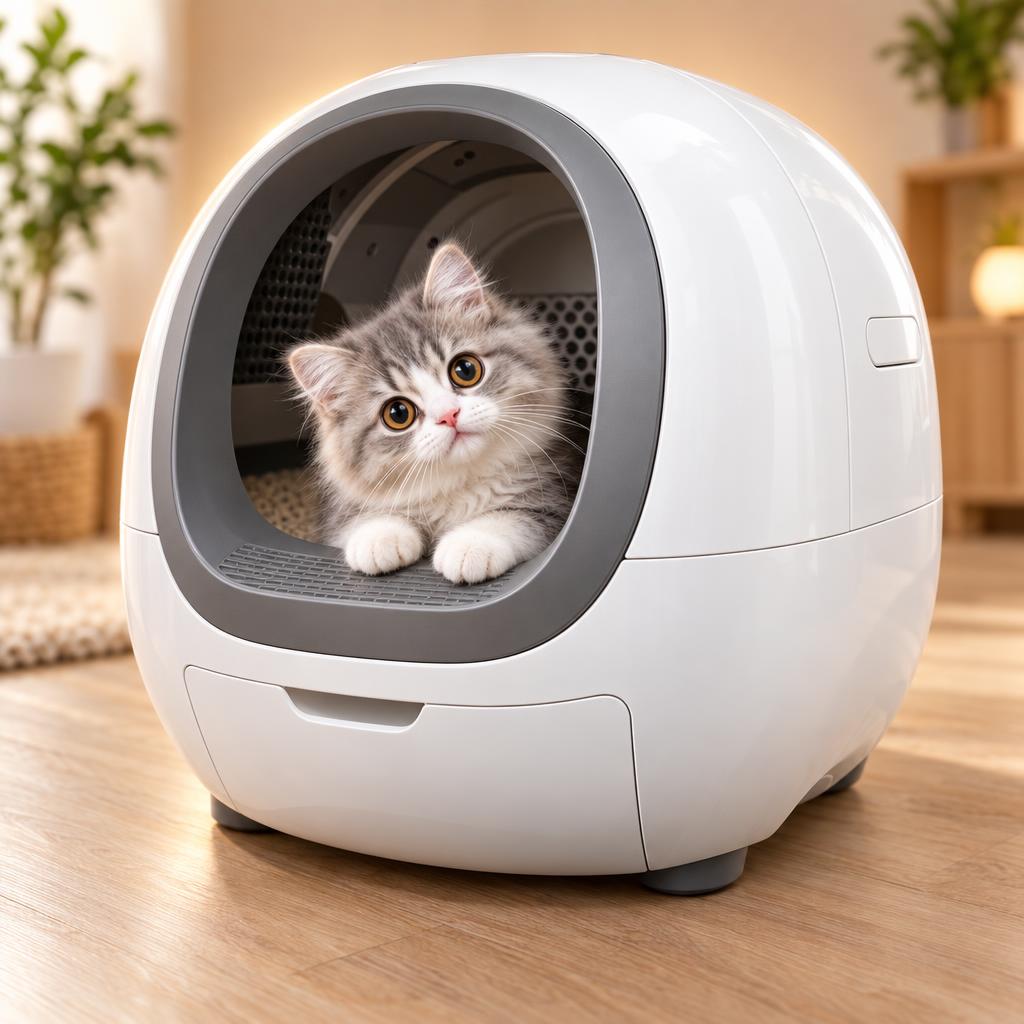
Seventy-six liters of drum at roughly half the price of the premium tier is the proposition, and it holds up. The PuraMax 2 measures 24.41 x 21.18 x 21.73 inches, weighs about 22 lbs, and accepts cats from 3.3 to 22 lbs through a 7.87-inch entrance that most cats step over rather than climb into. A seamless ShieldBase seals the cylinder, the N50 2.0 cartridge is rated by PETKIT to remove at least 98% of ammonia for up to a month, and the listing includes two years of coverage. The door stays open throughout the cycle, so a cat can’t be shut inside if a sensor misreads.
If the machine has to fit under a windowsill or a wall shelf, its 21.73-inch height clears obstacles the 29.5-inch Litter-Robot 4 can’t, and the low threshold suits cats that dislike climbing.
The sensor is the risk you accept at this price. False triggering is widely reported and typically appears after several months, and emptying the drum for a full litter change is slower than on competing machines. Crystal litter is excluded. We’d still buy it as a first automatic box, while planning for a two-to-three-year life rather than a decade, and we’d put a board under it on day one.
Best for: First-time buyers who want premium features at half the price and accept a shorter service life.
What to Check Before You Buy It
-
Put it on a hard, level floor. Weight sensors misread on carpet, and uneven placement is linked to false sensor triggers. A board underneath is a legitimate fix.
-
Think about how your cat urinates. Cats that spray high on the wall of a covered box are the ones whose owners report leakage; low squatters are fine.
-
Measure 24.41 inches of wall. It’s wider than a Litter-Robot 4 despite standing almost 8 inches shorter, so height and width work in opposite directions.
-
Check your litter. Clay, tofu, bentonite and mixed clumping work; crystal does not, and loosely clumping brands cause sifting problems.
-
Budget for consumables and a shorter life. The N50 cartridge lasts about a month, and owner reports suggest planning around two to three years rather than ten.
FAQ
Is the PETKIT PuraMax 2 worth it?
The PETKIT PuraMax 2 is worth it for buyers who want automatic cleaning at roughly half the price of a Litter-Robot 4 and accept a shorter expected service life. It offers a 76-liter drum, a low 7.87-inch entrance and two years of coverage. The main risks are false sensor triggering reported after several months and leakage with cats that urinate high on the drum wall.
Why does the PETKIT PuraMax sensor keep triggering?
False sensor triggering is a widely reported issue discussed on PETKIT’s own support forum, where owners describe cycles stopping as though a cat were inside an empty machine. Placement is the most common fix owners suggest: the unit needs to sit level on a hard floor. Carpet also prevents the weight sensors from registering a cat correctly.
Does the PETKIT PuraMax 2 leak?
The PuraMax 2 uses a redesigned seamless ShieldBase that addresses the seepage reported on the original model, but owners whose cats urinate high on the drum wall still report leakage. It is largely a cat-dependent problem rather than a universal defect. Cats that squat low in the litter rarely cause it.
How long does a PETKIT PuraMax 2 last?
Owner reports on Trustpilot and Amazon commonly describe faults appearing between several months and two years, often involving sensors or connectivity. PETKIT includes two years of coverage on this listing, longer than the single year bundled with the Litter-Robot 4. Treat it as a medium-term purchase rather than a decade-long one.